German cockroach-like adults and nymphs using measured size, two pronotal stripes, wing development, life stage, room, moisture, and geographic context
Identify indoor roaches, outdoor visitors, nymphs, and egg cases from one photo
Cockroach Identifier for Indoor and Outdoor Species
Upload a clear cockroach photo to compare the specimen with German, American, Oriental, brown-banded, smoky-brown, Asian, wood, field, and other cockroach groups. The tool evaluates body size, pronotum markings, wing length, horizontal bands, abdomen shape, antennae, legs, life stage, egg-case form, room, moisture, food access, season, and geographic region. It also separates cockroaches from beetles, crickets, true water bugs, earwigs, bed bugs, and other household insects. A responsible result identifies the visible specimen without automatically claiming an infestation, structural problem, food contamination, disease transmission, or treatment need.
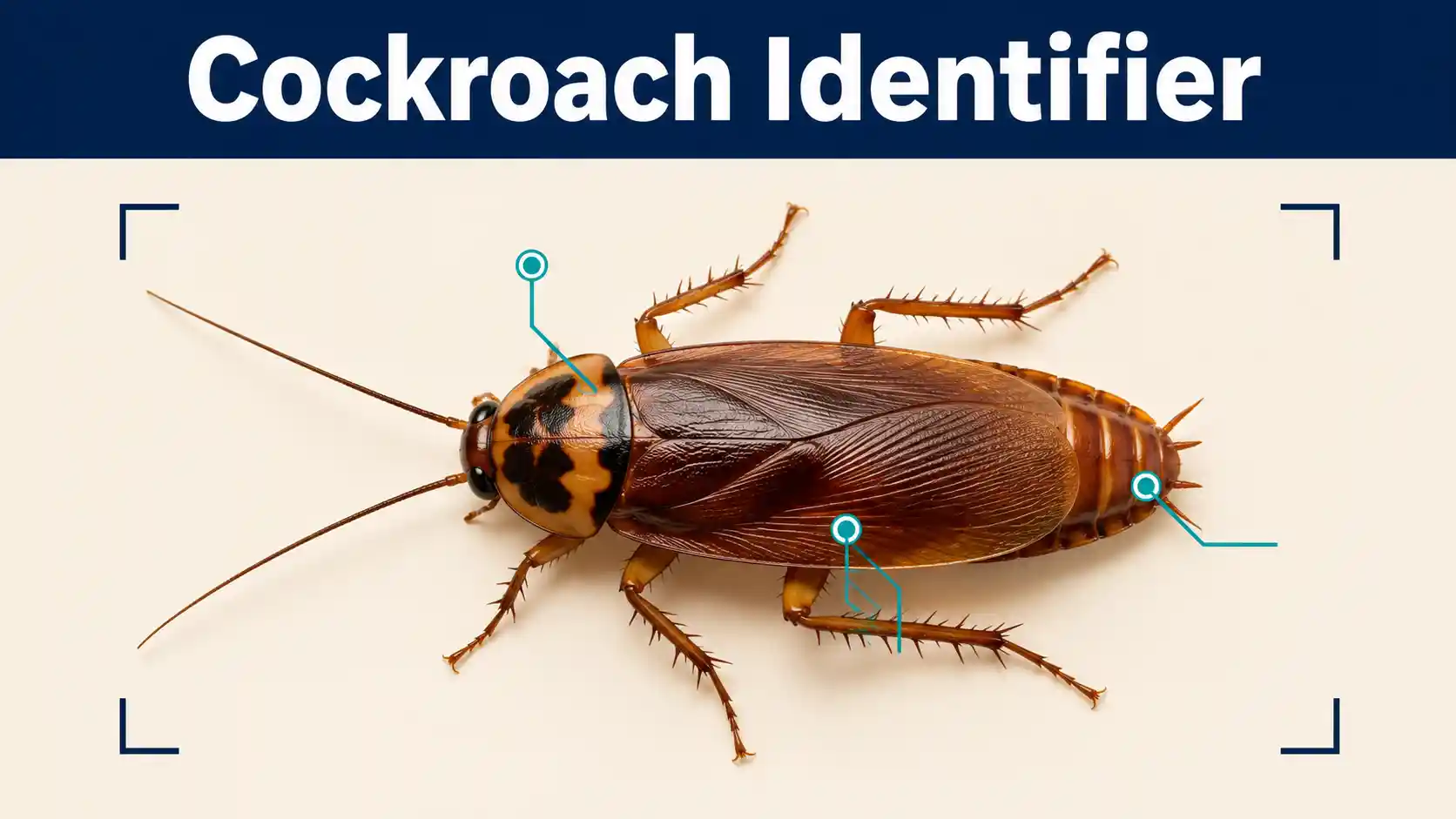
How photo-based cockroach identification works
Body size, pronotum, wings, bands, antennae, life stage, room, moisture, season, and geography build the match
A useful result starts by confirming that the specimen is a cockroach rather than a beetle, cricket, true water bug, earwig, bed bug, silverfish, termite, or another household insect. The analysis compares measured size, flattened body form, antennae, spiny legs, pronotum, wings, bands, abdomen, rear structures, life stage, room, hiding site, moisture, date, and geographic region.
Small indoor species require careful comparison. Two longitudinal pronotal stripes can support a German cockroach-like match, while pale cross-bands can support a brown-banded group. Asian, field, and other outdoor cockroaches may overlap in size or pattern, so flight, light attraction, wing length, vegetation, season, and geography matter.
Large cockroaches require a different evidence set. Body length, pronotum border, overall color, wing coverage, body sheen, damp or dry habitat, drain or sewer context, climate, and outdoor vegetation help compare American, Oriental, smoky-brown, Australian, wood, and related groups.
The result keeps specimen identity separate from infestation size, food contamination, pathogen carriage, allergen exposure, structural damage, and treatment decisions. One photographed cockroach does not prove a large indoor population or show what control method is appropriate.
- 1Upload, take, or paste one image
Choose a file, use your phone camera, click the paste icon, or press Ctrl+V or Command+V.
- 2Add facts that the photo cannot show
Country, environment, approximate size, location, and observed behavior can narrow the answer.
- 3Review the match and its evidence
Check the likely name, confidence bar, visible clues, alternatives, safety note, and recommended next step.
Indoor pest species, outdoor visitors, nymphs, egg cases, shed skins, traps, and cockroach lookalikes
Identify likely cockroach groups without calling every brown household insect a roach or every single visitor an infestation
The page covers German, American, Oriental, brown-banded, smoky-brown, Australian, Asian, wood, field, and other cockroach groups. It also compares nymphs, egg cases, shed skins, beetles, crickets, true water bugs, earwigs, bed bugs, silverfish, and termites.
Brown-banded cockroach-like adults and nymphs using pale cross-bands, body shape, wing length, sex-related form, dry hiding sites, and indoor location
American, smoky-brown, Australian, Oriental, and other larger cockroach groups using size, pronotum, color, wing coverage, body sheen, habitat, climate, and moisture
Outdoor wood, field, Asian, and other cockroach visitors when flight, light attraction, vegetation, season, wing length, and region support an outdoor origin
Cockroach nymphs, adults, egg cases, shed skins, trap specimens, and broad life-stage evidence when enough detail is visible
Cockroach lookalikes including beetles, crickets, true water bugs, earwigs, bed bugs, silverfish, termites, and other household insects
Cockroach evidence that matters
Read the pronotum, wings, bands, antennae, legs, abdomen, life stage, room, moisture, season, and range together
No single brown color, long antenna, kitchen location, nighttime sighting, or flattened body proves a species. A stronger result combines several independent features and remains broad when anatomy, scale, life stage, or context is missing.
Photograph one intact cockroach from directly above and from the side when safe. Show the head shield, antennae, wings or wing pads, abdomen, legs, markings, and full body. Add a ruler or measured length, note the room and exact hiding area, and photograph any egg case, trap catch, droppings, shed skin, or repeated activity separately without touching contaminated debris.
- Use macro mode and fill the frame with one intact specimen without touching it with bare hands.
- Take a top view showing the pronotum behind the head, body outline, wings, bands, abdomen, and legs.
- Add a side view showing wing length, body thickness, head position, abdomen, and rear cerci when visible.
- Include a ruler or provide a measured body length because German, brown-banded, American, Oriental, and outdoor cockroaches differ greatly in size.
- Use neutral light because flash glare can hide pronotal stripes, pale bands, body sheen, and fine surface texture.
- Record the room, exact hiding place, moisture source, time of day, date, country, state or province, and whether the insect flew or ran.
- Photograph any egg case, shed skin, droppings, trap capture, or repeated activity separately with scale, but avoid bare-hand contact.
- For an insect near a drain or sewer opening, photograph from a safe dry position and do not reach into plumbing or contaminated debris.
- Avoid crushed, wet, pesticide-covered, glue-obscured, or badly decomposed specimens because the pronotum, wings, bands, and abdomen may be unreadable.
What a responsible cockroach result includes
A likely species group, visible evidence, realistic lookalikes, uncertainty, monitoring guidance, and next verification step
The result explains the leading adult, nymph, or egg-case match, the visible features supporting it, the closest alternatives, missing evidence, confidence limits, and a practical next step. It does not make unsupported infestation, contamination, disease, allergy, damage, or pesticide claims.
- The most likely cockroach common name and scientific group when visible evidence supports them
- A broader indoor pest, outdoor visitor, nymph, egg case, or cockroach-like insect category when decisive features are missing
- A high, moderate, or low confidence label without false numerical precision
- Visible evidence such as body size, pronotum markings, wings, bands, antennae, legs, abdomen, life stage, and room context
- Realistic cockroach and non-cockroach lookalikes with the feature that would help separate them
- An explanation of whether the specimen appears more consistent with an indoor-associated species or an incidental outdoor visitor
- A clear distinction between identifying one specimen and proving an infestation, contamination event, allergen exposure, or structural problem
- A practical next step involving monitoring, sanitation, moisture reduction, entry control, better photos, or professional confirmation without unsupported pesticide advice
Cockroach lookalikes and difficult comparisons
Separate roaches from beetles, crickets, water bugs, bed bugs, termites, and similar cockroach groups
Many household insects are brown, fast, flattened, nocturnal, or long-antennaed. These comparisons show why the pronotum, wing covers, legs, waist, body size, life stage, habitat, and geographic context matter.
Cockroach or beetle
Beetles usually have hardened forewings meeting in a clear central seam and may have shorter antennae. Cockroaches are generally flatter with very long antennae, spiny legs, and a broad pronotum partly covering the head.
Cockroach or cricket
Crickets have enlarged hind legs adapted for jumping and a different body profile. Cockroaches have a flatter oval body, more similar leg proportions, and a broad shield-like pronotum.
Cockroach or true water bug
True aquatic bugs have piercing beaks, grasping or swimming legs, shorter antennae, and an aquatic context. The common label water bug does not by itself establish a cockroach.
German or Asian cockroach
Both may show two dark pronotal stripes. Asian cockroaches often have longer wings, fly readily, occur outdoors, and come to lights, while German cockroaches are strongly associated with indoor harborages. Geography remains essential.
Cockroach nymph or bed bug
Cockroach nymphs have very long antennae, spiny legs, a more elongated body, and rear cerci. Bed bugs are broader, flatter, wingless, and have shorter antennae and different abdominal segmentation.
Cockroach egg case or unrelated capsule
A cockroach ootheca is a firm capsule with a characteristic ridged seam, size, shape, and attachment pattern. Seeds, fly pupae, moth cases, debris, and manufactured fragments can look similar without scale and context.
Why cockroach identification can fail
No size reference, hidden pronotum, crushed specimens, room shortcuts, outdoor visitors, and infestation assumptions reduce confidence
Cockroaches are fast, often photographed in poor light, and easily damaged in traps. Wings overlap, stripes disappear under glare, nymphs look different from adults, and sticky glue can hide the abdomen. A responsible result stays broad when the specimen, life stage, scale, room, date, or location is unclear.
- The specimen occupies only a small part of the image and the pronotum, wing length, bands, antennae, and abdomen cannot be examined.
- Every small tan cockroach in a kitchen is called German without confirming the two dark pronotal stripes and measured size.
- Every large reddish-brown cockroach is called American without comparing the pale pronotum border, wings, size, habitat, and region.
- A beetle, cricket, true water bug, earwig, bed bug, or termite is called a cockroach from color or room location alone.
- A nymph is identified as a separate species without accounting for immature wing pads and changing body pattern.
- One outdoor cockroach near a door or porch light is treated as proof of an indoor infestation.
- Droppings, an egg case, a trap, or room damage is shown without a clear specimen or scale.
- No measured size, room, moisture source, date, geographic location, or activity pattern is provided.
- The insect is crushed, covered with pesticide, hidden under opaque glue, or missing the head shield and abdomen.
- A photo result is used to claim food contamination, disease transmission, asthma causation, or infestation severity.
Worked cockroach-identification examples
Pronotum markings, bands, wings, measured size, life stage, moisture, room, season, and region narrow the match
Each case combines visible anatomy with context to compare German, American, Oriental, brown-banded, outdoor, and beetle-like possibilities without overclaiming infestation status.
Small tan cockroach with two dark stripes in a kitchen
Compare measured size, two longitudinal pronotal stripes, wing length, abdomen, nymph or adult stage, moisture, appliance or cabinet harborage, repeated activity, season, and region before supporting a German cockroach-like identification.
Large reddish-brown cockroach near a basement drain
Use body length, reddish color, pale pronotum border, wing coverage, abdomen, drain or sewer context, humidity, climate, and geographic range to compare an American cockroach with smoky-brown, Australian, Oriental, and outdoor species.
Shiny dark cockroach in a cool damp lower level
Compare dark brown to black color, broad body, shorter or reduced wings, measured size, damp basement or crawlspace habitat, season, and region before narrowing an Oriental cockroach-like group.
Small banded cockroach high on a wall or appliance
Examine pale horizontal bands, body shape, sex-related wing length, size, dry warm hiding place, furniture or electronics context, and region to compare a brown-banded cockroach with German nymphs and beetle lookalikes.
Winged cockroach attracted to a porch light
Use wing length, flight, pronotum, body size, outdoor vegetation, weather, season, location, and whether repeated indoor life stages are present to compare an outdoor wood or Asian cockroach with an indoor pest species.
Observe the specimen and hiding site without bare-hand contact or indiscriminate pesticide use
A photograph cannot prove contamination, disease transmission, allergy exposure, population size, or the correct treatment
A photo can suggest the cockroach type but cannot prove infestation size, contamination, disease transmission, or allergy exposure. Avoid bare-hand contact with insects and debris, protect food, and use integrated pest management or a qualified professional for persistent activity.
Avoid bare-hand contact with live insects, egg cases, droppings, shed skins, sewage, drain debris, pesticide residue, and visibly contaminated food. Protect food, clean crumbs and spills, reduce moisture, repair leaks, store items securely, monitor activity, and seal suitable entry gaps when appropriate. Do not use total-release foggers, mix pesticides, or apply products off label. Persistent or widespread activity may require a qualified pest-management professional. Seek medical advice for allergy, asthma, or illness concerns rather than relying on an image result.
Choose the next identification step
Use the beetle, broader insect, or complete-scene workflow when it provides stronger evidence
Questions about identifying cockroaches from pictures
Direct answers before you upload a cockroach photo
Can a cockroach be identified from a photo?
Often to a useful species or species group. Exact identification improves with a sharp top view, side view, measured size, room, moisture, life stage, date, and location.
What photo gives the best cockroach identification?
Show one intact specimen from above and the side, including the pronotum, antennae, wings, bands, abdomen, legs, rear end, and a ruler or measured body length.
How can I identify a German cockroach?
Adults are small and tan to light brown with two dark longitudinal stripes on the pronotum. Size, wings, room, moisture, region, and comparison with Asian cockroaches still matter.
How can I identify an American cockroach?
It is a large reddish-brown cockroach with a pale border around the pronotum. Measured size, wing coverage, habitat, climate, and comparison with similar large species are needed.
What does an Oriental cockroach look like?
It is usually dark brown to black, broad, and shiny, with reduced wings in females and shorter wings in males. Damp lower-level habitats often provide supporting context.
What does a brown-banded cockroach look like?
Adults and nymphs show pale transverse bands. They are small and may occur in warmer, drier, higher indoor locations, but the bands and body form must be visible.
Can it identify a baby cockroach?
Yes, often to a broader group. Nymphs lack full wings and may show different bands or stripes, so size, wing pads, pronotum, abdomen, room, and nearby adults help.
Can it identify a cockroach egg case?
It can compare the capsule shape, ridged seam, color, size, attachment, and room. A complete egg case with scale is more useful than a broken or opened shell.
Does one cockroach mean my home is infested?
No. One specimen may be an outdoor visitor. Repeated live insects, multiple life stages, egg cases, fresh droppings, shed skins, and trap captures provide stronger evidence.
Can it distinguish a cockroach from a beetle?
Usually when the top view is clear. Beetles typically have hardened wing covers meeting in a central seam, while cockroaches have a flatter body, long antennae, spiny legs, and a broad pronotum.
Is a water bug always a cockroach?
No. Water bug is used loosely for some cockroaches and for true aquatic bugs. Clear legs, antennae, body shape, wings, size, and habitat are needed.
Can a photo show whether a cockroach contaminated food?
No. A photo cannot prove that a particular insect contacted or contaminated a specific food or surface. Protect food and discard items according to food-safety guidance when contamination is evident.
Can it tell whether cockroaches caused asthma symptoms?
No. Cockroach debris can contribute to indoor allergens, but a photo cannot measure exposure or diagnose asthma or allergy. Seek medical advice for symptoms.
Should I use a bug bomb after seeing a cockroach?
Not automatically. Total-release foggers and indiscriminate sprays may increase exposure and often miss hidden harborages. Confirm the problem and use integrated pest management.
Can it estimate how many cockroaches are present?
No. A photograph cannot measure population size. Monitoring traps, repeated sightings, multiple life stages, egg cases, droppings, and a professional inspection provide better evidence.
Can it identify an outdoor wood cockroach?
Sometimes. Flight, light attraction, long wings, vegetation, season, climate, measured size, and absence of repeated indoor life stages can support an outdoor-visitor result.
Can I use the Cockroach Identifier without installing an app?
Yes. Open the page in a browser, choose an image from your device or take a photo, add optional context, and review the likely match and evidence.
Authoritative cockroach anatomy, indoor-species, allergen, sanitation, and integrated-management references
Verify species markings, life stages, hiding sites, monitoring evidence, asthma considerations, and safer management
These EPA, extension, and CDC references explain common cockroach species, pronotum markings, size, egg cases, indoor habitats, allergens, sanitation, moisture control, monitoring, integrated pest management, and why sprays and foggers may be inappropriate.
- U.S. Environmental Protection Agency — Cockroaches and Schools
Current EPA information on German, American, and brown-banded cockroach identification, life cycles, health concerns, sanitation, monitoring, and integrated pest management.
- University of Minnesota Extension — Cockroaches
Extension guidance on German, brown-banded, American, and Oriental cockroach appearance, indoor habitats, life stages, egg cases, monitoring, and management.
- Centers for Disease Control and Prevention — Controlling Asthma
Public-health guidance on reducing food and water sources, cleaning crumbs and spills, sealing gaps, and avoiding sprays and foggers that may trigger asthma attacks.