Adult bed bug-like specimens using measured size, flat oval form, abdominal segmentation, six legs, antennae, reduced wing pads, color, and feeding-state clues
Identify adults, nymphs, eggs, shed skins, and bed bug lookalikes from one photo
Bed Bug Identifier for Signs and Lookalikes
Upload a clear photo of one suspected bed bug or related sign. This Bed Bug Identifier compares the specimen with adult bed bugs, nymphs, eggs, shed skins, bat-bug-like relatives, cockroach nymphs, carpet beetles, spider beetles, fleas, ticks, booklice, and other small household arthropods. It evaluates measured size, flat oval body form, abdominal segmentation, color, antennae, legs, reduced wing pads, feeding state, life stage, mattress or furniture context, spotting, and nearby evidence. A responsible result identifies visible evidence without diagnosing bites, proving an infestation from one sign, estimating population size, or selecting a treatment from a photograph.
How photo-based bed bug comparison works
Combine a clear specimen, millimeter scale, life stage, shelter evidence, and location instead of diagnosing from a bite or stain
The analysis first decides whether the upload shows an adult insect, nymph, egg, shed skin, spotting, stain, debris, or a room scene. An intact specimen supports a stronger result than skin marks or environmental signs alone.
Adults are compared through measured length, a broad flat oval body, reddish-brown color, abdominal segmentation, six legs, antennae, reduced wing pads, and whether the body appears unfed or swollen after feeding. No single color or mattress location proves the match.
Pale nymphs and tiny eggs need macro detail and scale. Nymphs can be translucent, while eggs are near pinhead size. Booklice, mites, lice, lint, dandruff, seeds, and other insect eggs remain plausible when the required anatomy or attachment context is missing.
The result keeps specimen identity separate from bite diagnosis, infestation size, source, duration, cleanliness, disease transmission, allergy, treatment, and legal responsibility. Those conclusions cannot be established from one photograph.
- 1Upload, take, or paste one image
Choose a file, use your phone camera, click the paste icon, or press Ctrl+V or Command+V.
- 2Add facts that the photo cannot show
Country, environment, approximate size, location, and observed behavior can narrow the answer.
- 3Review the match and its evidence
Check the likely name, confidence bar, visible clues, alternatives, safety note, and recommended next step.
Adults, nymphs, eggs, shed skins, spotting, traps, shelter evidence, and bed bug lookalikes
Identify likely bed bug evidence without calling every bite, brown speck, mattress stain, or small household arthropod a bed bug
The page covers adult and nymphal bed bugs, eggs, cast skins, fecal spotting, rusty stains, trapped specimens, bat-bug-like relatives, cockroach nymphs, carpet and spider beetles, fleas, ticks, booklice, lice, mites, and unrelated debris.
Bed bug nymphs using small size, pale or translucent body, visible segmentation, six legs, and recent-feeding coloration when genuinely visible
Possible bed bug eggs, shed skins, fecal spotting, rusty stains, trap catches, and shelter evidence while keeping each sign's limits explicit
Bed-bug-like relatives such as bat bugs only to a cautious broader group when microscopic characters are unavailable
Common lookalikes including cockroach nymphs, carpet beetles, spider beetles, fleas, ticks, booklice, lice, mites, and other household arthropods
Situations where the upload is only a bite, stain, mattress seam, debris field, or room scene and a specimen-level conclusion is not supported
Bed bug evidence that matters
Read measured size, body form, abdomen, antennae, legs, wing pads, life stage, shelter location, and supporting evidence together
No bite pattern, reddish-brown color, flat body, mattress location, dark spot, or white speck proves a bed bug by itself. A stronger result combines a clear specimen with scale and independent physical evidence.
Photograph one intact specimen from directly above and from the side when possible. Use macro mode, include a ruler or millimeter scale, and show the head, antennae, six legs, abdomen, body outline, and color. Photograph eggs, shed skins, dark spotting, mattress seams, furniture joints, luggage, or trap evidence separately. Avoid crushing the specimen or relying only on a skin mark.
- Use macro mode and fill the frame with one intact specimen without crushing it.
- Take a sharp top view showing the broad body outline, head, antennae, six legs, and abdominal segments.
- Add a side view showing body thickness and whether the insect is flat, swollen, or laterally compressed.
- Place a millimeter ruler or printed scale beside the specimen because adults, nymphs, fleas, beetles, and ticks differ greatly in size.
- Use neutral light and avoid strong flash glare that can hide pale nymphs, body hairs, and abdominal segmentation.
- Record the exact location, such as a mattress seam, headboard joint, sofa, luggage pocket, baseboard, trap, or wall crack.
- Photograph eggs, shed skins, dark spots, stains, and live insects separately rather than combining all evidence in one distant image.
- Use a clear sealed container or transparent tape only when it can be done safely, and avoid glue covering the body features.
- Do not upload only a bite or rash when an insect or physical sign can be photographed instead.
What a responsible bed bug result includes
A likely specimen or evidence category, visible features, realistic lookalikes, uncertainty, and a safe confirmation step
The result explains the leading adult, nymph, egg, shed-skin, spotting, or alternative-arthropod match, the evidence supporting it, the closest lookalikes, missing details, confidence limits, and what to photograph or preserve next. It does not diagnose bites or invent infestation size, source, disease, or treatment outcomes.
- The most likely bed bug life stage or alternative arthropod group supported by the photograph
- A broader true-bug, beetle, cockroach nymph, flea, tick, louse, mite, or uncertain-debris category when decisive features are missing
- A high, moderate, or low confidence label without false numerical precision
- Visible evidence such as measured size, body outline, abdominal segmentation, antennae, legs, wing pads, color, and feeding-state clues
- A distinction between an intact specimen, egg, shed skin, spotting, stain, trap capture, and unsupported room or skin evidence
- Realistic lookalikes and the feature that would help separate them
- An explanation of why bites, stains, or one isolated sign do not independently confirm an infestation
- A practical next step for preserving evidence, improving the photograph, monitoring locations, and obtaining expert confirmation
Bed bug lookalikes and difficult comparisons
Separate bed bugs from cockroach nymphs, carpet and spider beetles, fleas, ticks, booklice, and close relatives
Many small household arthropods are brown, flat, oval, pale, or found near beds. These comparisons show why scale, antennae, leg count, body compression, wing-cover seams, abdomen, rear structures, and shelter context matter.
Bed bug or cockroach nymph
Cockroach nymphs usually have much longer antennae, spiny legs, a more elongated body, rear cerci, and a broader pronotum. Bed bugs are flatter and broader with more obvious transverse abdominal segmentation.
Bed bug or carpet beetle
Adult carpet beetles are more domed and have hardened wing covers meeting in a central seam; many are mottled or hairy. Carpet beetle larvae are elongated and bristly rather than flat and oval.
Bed bug or spider beetle
Spider beetles are rounded or globe-like with hardened wing covers and longer-looking legs, often resembling tiny spiders. Bed bugs are dorsoventrally flat with a visibly segmented abdomen.
Bed bug or flea
Fleas are compressed from side to side and have enlarged hind legs for jumping. Bed bugs are broad from above and lack the flea's narrow side profile and jumping adaptations.
Bed bug or tick
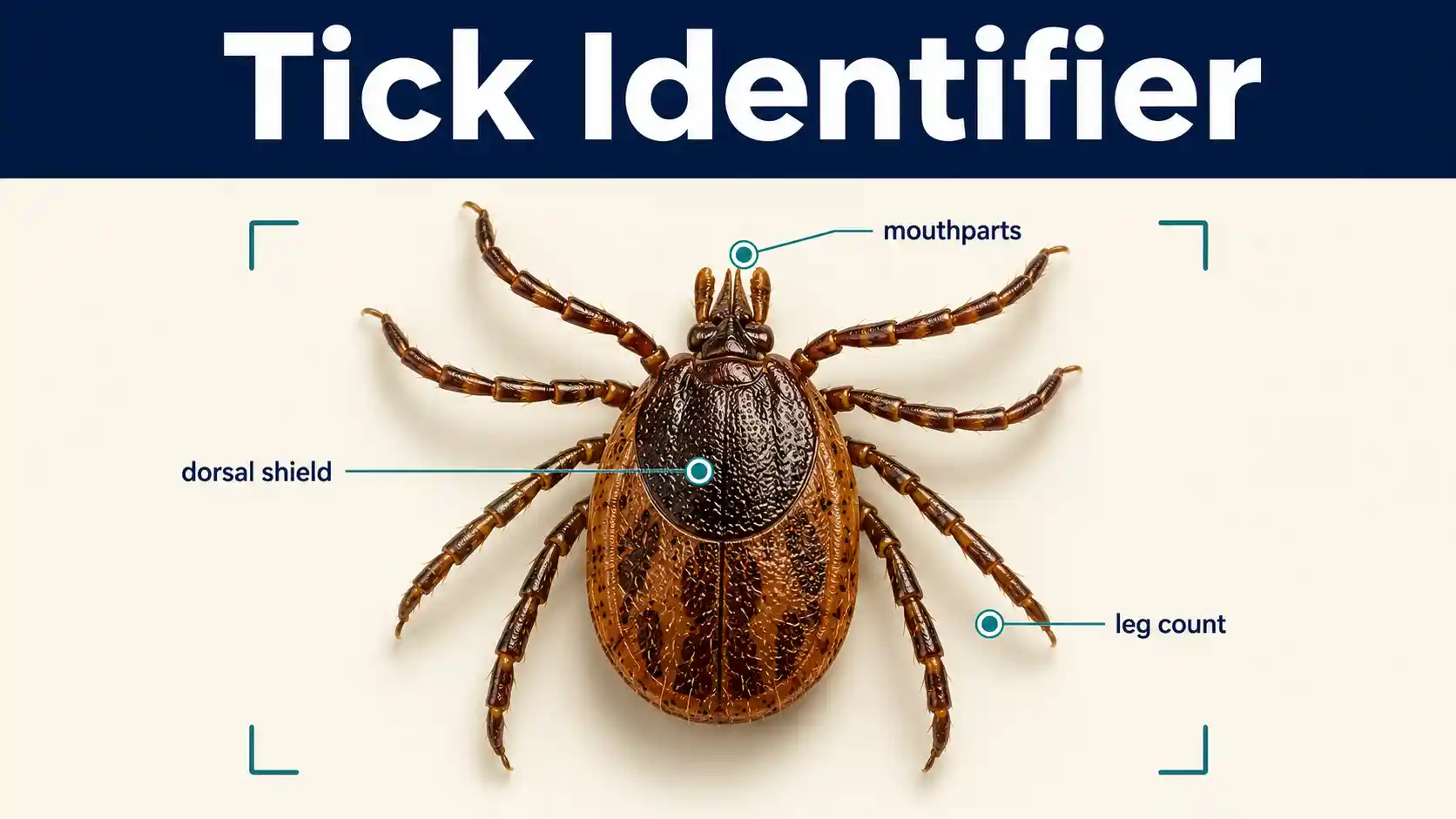
Adult and nymphal ticks have eight legs and no insect antennae. Bed bugs have six legs, antennae, and a distinctly segmented insect abdomen.
Bed bug or bat-bug-like relative
These close relatives can look nearly identical in ordinary photos. Host context may help, but exact separation often requires microscopic assessment of body hairs and head or pronotum features.
Why bed bug identification can fail
Bite-only photos, no scale, crushed specimens, stains without insects, pale debris, opaque traps, and infestation assumptions reduce confidence
Bed bugs are small, hide in narrow shelters, and change appearance across life stages and feeding states. Flash glare, crushed bodies, glue, fabric fibers, and missing scale can hide decisive anatomy. The result stays broad when only bites, stains, debris, or a distant room scene is available.
- The photo shows only red skin marks, which cannot diagnose bed bugs.
- The specimen is crushed or smeared, hiding the abdomen, antennae, legs, and body outline.
- No millimeter scale is provided for a tiny brown or pale arthropod.
- A carpet beetle, spider beetle, cockroach nymph, flea, tick, or booklouse is assumed to be a bed bug from color alone.
- Dark mattress spots or rusty stains are treated as proof without a specimen or other physical evidence.
- A pale speck of lint, dandruff, seed material, or debris is called a bed bug egg without scale or attachment context.
- One insect or shed skin is used to estimate infestation size, duration, or source.
- A specimen trapped in opaque glue cannot be viewed from above or measured accurately.
- Furniture is discarded or moved through a building before the identification is confirmed.
- A bat-bug-like relative is assigned to an exact species even though microscopic hair characters are not visible.
Worked bed bug identification examples
Measured size, body outline, abdominal segments, antennae, legs, life stage, furniture location, and supporting evidence narrow the match
Each case combines specimen anatomy with shelter context to compare adult bed bugs, pale nymphs, eggs, cast skins, stains, cockroach nymphs, beetles, fleas, ticks, and debris without overclaiming infestation status.
Flat reddish-brown insect in a mattress seam
A strong review uses a top view, millimeter length, broad oval outline, segmented abdomen, six legs, short antennae, reduced wing pads, and the exact seam location. One specimen supports identification but does not reveal infestation size.
Tiny pale insect with a red abdomen
The tool compares a recently fed bed bug nymph with booklice, mites, lice, and other tiny arthropods using body segmentation, six legs, antennae, scale, shelter location, and whether the image is sharp enough to show the full outline.
Small brown insect caught on a bed-frame trap
The result compares bed bugs with cockroach nymphs, carpet beetles, spider beetles, fleas, and ticks. A clear top and side view outside opaque glue is more useful than a distant trap photograph.
Pearl-white specks near a furniture joint
Possible eggs are assessed through approximately one-millimeter scale, shape, attachment, clustering, nearby shed skins, live insects, and location. Lint, dandruff, seeds, and other insect eggs remain alternatives when anatomy is absent.
Dark spots and rusty marks on bedding
The page treats spotting and stains as supporting evidence only. A live or preserved adult or nymph, cast skins, eggs, repeated evidence, and expert confirmation provide a stronger conclusion than fabric marks alone.
Preserve evidence without spreading belongings or using unsafe treatments
A photograph cannot diagnose a bite, estimate infestation size, identify the source, or choose a safe and effective treatment
A photo can suggest whether a specimen resembles a bed bug, but bites and stains are not diagnostic. Preserve a sample, avoid spreading belongings between rooms, and confirm the identification before using pesticides or discarding furniture.
Do not rely on bite patterns alone. Preserve a clear specimen when possible, document exact locations and dates, and avoid moving untreated furniture, bedding, luggage, or clutter through other rooms. Do not use bug bombs, rubbing alcohol, kerosene, gasoline, unregistered products, or pesticides contrary to the label. Confirm the identification with a qualified extension or pest-management professional before major treatment or disposal decisions. Seek healthcare advice for severe skin reactions, signs of infection, or allergy concerns.
Choose the next identification step
Use the cockroach, beetle, or broader insect workflow when anatomy points away from a bed bug
Questions about identifying bed bugs from pictures
Direct answers before you upload a bed bug photo
Can a bed bug be identified from a photo?
Often, yes. A sharp macro photograph with a millimeter scale can support identification of an adult or nymph, but damaged specimens and close relatives may require expert or microscopic examination.
Can bed bug bites be identified from a skin photo?
No. Bed bug bites are not visually diagnostic and can resemble mosquito, flea, mite, or dermatitis reactions. Look for and identify physical insects or shelter evidence instead.
Do bed bugs spread disease?
Bed bugs are not known to spread diseases to people. They can still cause itching, sleep loss, anxiety, and occasional allergic reactions.
How large is an adult bed bug?
Adults are commonly about 5 to 7 millimeters long, roughly apple-seed sized. A measured scale is more reliable than a visual estimate.
What does a bed bug nymph look like?
Nymphs are smaller and often pale, translucent, or yellowish. A recent blood meal can make the abdomen appear red, but size and full anatomy still matter.
What do bed bug eggs look like?
Possible eggs are tiny, about pinhead sized, and pearl white. Lint and other insect eggs can look similar, so scale, attachment, and nearby bed bug evidence are important.
Does one bed bug prove an infestation?
No. One specimen warrants careful inspection and monitoring, but it does not reveal population size, duration, or the full extent of activity.
Do black dots on a mattress prove bed bugs?
No. Dark spots can support suspicion, but stains and marks have other causes. Live insects, nymphs, eggs, or shed skins provide stronger evidence.
How can I tell a bed bug from a cockroach nymph?
Cockroach nymphs usually have much longer antennae, spiny legs, a more elongated body, rear cerci, and a different pronotum. Bed bugs are broader, flatter, and more clearly segmented across the abdomen.
How can I tell a bed bug from a carpet beetle?
Carpet beetles are more domed and have hardened wing covers that meet in a central seam. Many adults are patterned or hairy, unlike the flat segmented body of a bed bug.
How can I tell a bed bug from a flea?
Fleas are narrow from side to side and have enlarged hind legs for jumping. Bed bugs are broad and flat when viewed from above.
How can I tell a bed bug from a tick?
Adult and nymphal ticks have eight legs and lack insect antennae. Bed bugs are insects with six legs and visible antennae.
Can a photo distinguish a bat bug from a bed bug?
Sometimes only broadly. These relatives can be extremely similar, and exact separation may require microscopic examination of hairs and head or pronotum features.
Can the tool tell whether a bed bug recently fed?
It may describe a swollen, elongated, reddish appearance that is compatible with recent feeding, but it cannot determine the exact feeding time or host.
Does cleanliness determine whether bed bugs are present?
No. Bed bugs can occur in clean or cluttered places and may travel on luggage, furniture, clothing, and other belongings.
Can the tool choose a bed bug treatment?
No. Treatment depends on confirmed identification, extent, building type, local rules, resistance, and product labels. A qualified pest professional or extension service can help.
Which photos produce the best result?
Provide sharp top and side views of one intact specimen, a millimeter scale, the exact capture location, and separate images of any eggs, shed skins, spotting, or shelter evidence.
Authoritative bed bug appearance, life-stage, bite, inspection, and integrated-control references
Verify adult and nymph anatomy, eggs, shelter signs, bite limits, disease facts, inspection evidence, and safer control planning
These EPA and CDC references explain bed bug size, body form, life stages, eggs, common lookalikes, hiding places, physical signs, bite limitations, disease facts, inspection, documentation, and why correct identification should come before treatment.
- U.S. Environmental Protection Agency — Bed Bug Appearance and Life Cycle
Official descriptions of adult bed bugs, nymphs, eggs, size, body form, feeding-related appearance, life stages, and common lookalikes.
- Centers for Disease Control and Prevention — About Bed Bugs
Public-health guidance on bed bug appearance, hiding locations, signs, bites, disease limits, and why skin reactions alone do not confirm the cause.
- U.S. Environmental Protection Agency — Do-it-Yourself Bed Bug Control
Integrated-control guidance emphasizing correct identification, inspection, documentation, safe planning, and avoidance of dangerous or ineffective treatments.