Prepared dishes such as rice meals, noodle dishes, soups, stews, curries, casseroles, salads, sandwiches, wraps, dumplings, flatbreads, and regional specialties
Recognize dishes, produce, baked foods, snacks, and visible ingredients from one photo
Food Identifier for Dishes and Ingredients
Upload or paste a clear photo of one food item or plated dish. This Food Identifier compares the overall dish structure, visible ingredients, cooking method, cut shape, texture, color pattern, garnish, serving style, packaging, menu context, and any location or cuisine details you provide. It returns the most defensible food or dish match, explains which clues support it, and lists alternatives when several recipes or regional names could fit.
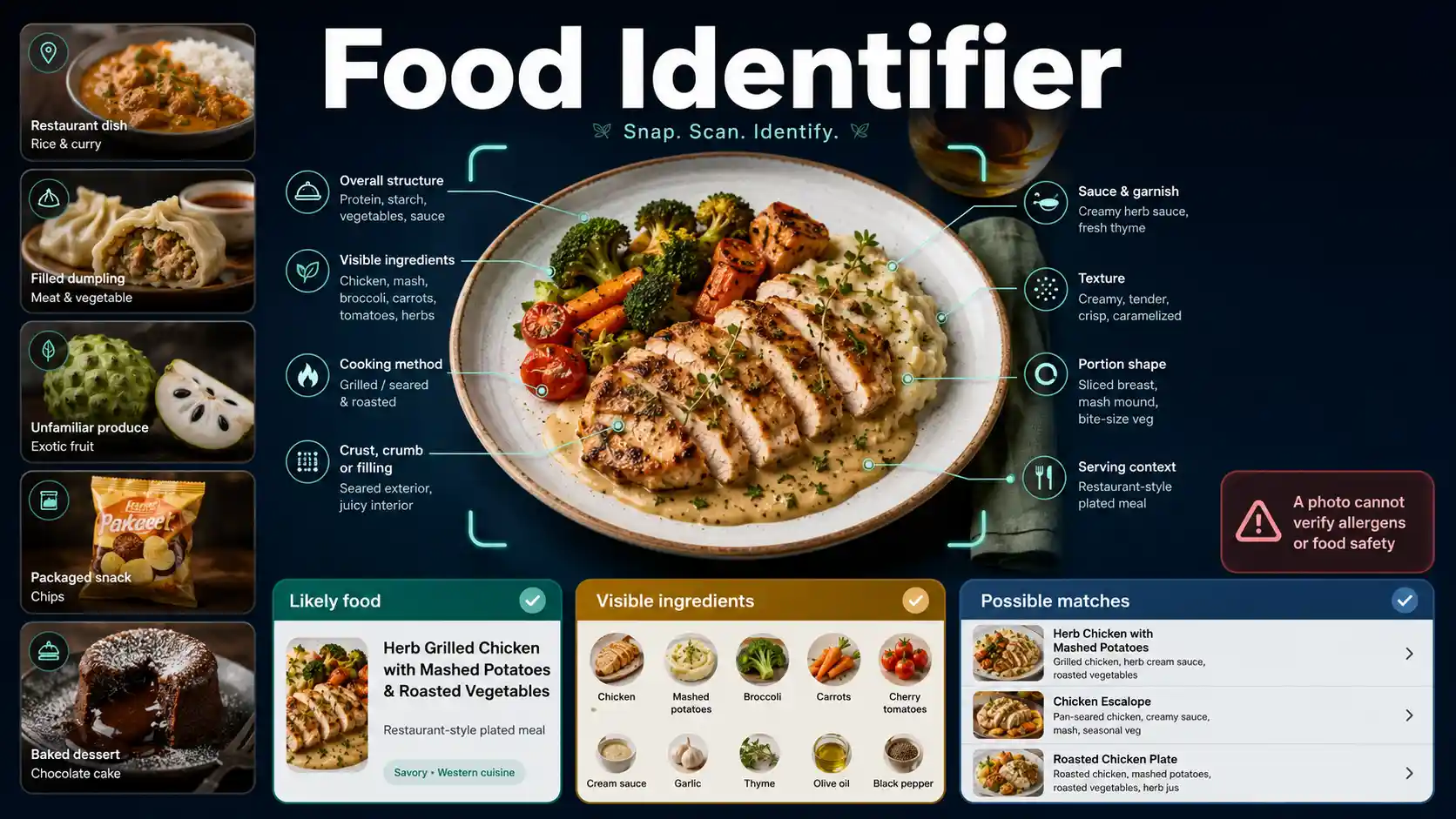
How food identification works
Visible structure suggests a dish, but hidden ingredients remain unknown
The tool first decides whether the image shows a complete prepared dish, one ingredient, raw produce, a baked item, a beverage, a packaged product, leftovers, or a non-food lookalike. It then compares shape, layers, crust, crumb, visible ingredients, sauce, garnish, cut style, cooking marks, serving vessel, and package text.
Cuisine and preparation context can change the leading match. The same combination of dough, meat, vegetables, rice, sauce, or spices may have different regional names and recipes. A responsible result describes the strongest visible category first and avoids inventing ingredients hidden inside a filling, puree, stock, dressing, batter, or processed product.
- 1Upload, take, or paste one image
Choose a file, use your phone camera, click the paste icon, or press Ctrl+V or Command+V.
- 2Add facts that the photo cannot show
Country, environment, approximate size, location, and observed behavior can narrow the answer.
- 3Review the match and its evidence
Check the likely name, confidence bar, visible clues, alternatives, safety note, and recommended next step.
Food and dish coverage
Identify prepared dishes, produce, baked foods, snacks, and packaged products
The identifier covers many visible foods and serving formats. It stays broad when processing, sauce, cooking, blending, breading, packaging, or a partial portion removes the evidence needed for an exact recipe or product match.
Baked foods and desserts such as breads, cakes, cookies, pastries, pies, puddings, sweets, and fried doughs
Raw produce including fruits, vegetables, herbs, grains, legumes, nuts, seeds, roots, tubers, and edible-looking plant products at a visual category level
Visible proteins such as whole fish, shellfish, eggs, cheese, recognizable cuts of meat, tofu, tempeh, and legumes when their form remains visible
Packaged foods, snacks, beverages, condiments, canned goods, and frozen products when the label or package design is readable
Restaurant, market, street-food, buffet, homemade, and leftover dishes when plating, ingredients, preparation, and cuisine context provide enough evidence
Broad food categories when sauce, processing, grinding, blending, breading, or cooking hides the exact ingredients
Non-food lookalikes such as decorative food models, pet treats, candles, soap, wax, clay, resin, toys, and artificial produce
Food features that matter
Show the complete dish, texture, interior, label, and serving context
Color alone rarely identifies a recipe. Stronger evidence comes from the arrangement of components, grain or noodle type, crust, crumb, filling, visible protein or produce, cooking marks, sauce, garnish, package information, and regional context.
Photograph the complete dish from directly above or at a slight angle, then add a close view of the interior, filling, crumb, sauce, label, or ingredient list when available. State whether the food is homemade, restaurant-served, packaged, raw, cooked, frozen, reheated, or purchased from a market, and mention the country or cuisine when known.
- Show the complete plate, bowl, package, fruit, vegetable, baked item, or drink in one sharp image.
- Use neutral daylight or even indoor light so browning, sauce color, produce skin, and texture remain accurate.
- Add a close cross-section when the filling, crumb, layers, seeds, meat interior, or center texture matters.
- Photograph the ingredient list, allergen statement, nutrition panel, brand, product name, and preparation directions on packaged food.
- Include the menu description, restaurant name, country, cuisine, market stall, or family recipe context when known.
- Place a utensil or familiar object nearby when portion size or food dimensions help separate alternatives.
- Show separate components before mixing when you are trying to identify ingredients in a homemade dish.
- Avoid heavy filters, dramatic color correction, steam-covered lenses, and deep shadows that change the food's appearance.
- Do not taste, open, disturb, or closely smell food that may be spoiled, contaminated, swollen, leaking, moldy, or otherwise questionable.
What the food result contains
A useful result separates likely identity from safety and nutrition
The answer should explain the most likely dish or food category, the visible clues supporting it, realistic alternatives, and the evidence needed to check the result. It must also state that hidden ingredients, allergens, calories, pathogens, temperature, freshness, and dietary suitability remain unverified.
- The most likely dish, food item, produce type, beverage, snack, or broader food category
- A high, moderate, or low confidence label without false numerical precision
- Visible evidence such as dish structure, ingredients, texture, crust, filling, sauce, garnish, cut, and serving style
- Likely preparation clues such as baked, fried, grilled, steamed, boiled, raw, fermented-looking, blended, or layered when visibly supported
- Plausible regional, recipe, ingredient, and product alternatives with the detail needed to separate them
- Useful attributes such as cuisine context, package text, apparent serving format, dominant ingredient group, and preparation state
- A clear statement of what cannot be confirmed, including hidden ingredients, allergens, nutrition, temperature, freshness, and safety
- A practical next step such as checking the label, asking the preparer, showing a cross-section, measuring the portion, or using official food-safety guidance
Common food lookalikes
Similar plating and color can hide different recipes
These comparisons show why a cross-section, menu description, ingredient list, package label, cooking method, or regional context often matters more than surface color.
Curry, stew, braise, or sauce-based dish
Sauce color cannot establish the recipe. Visible protein, legumes, vegetables, oil separation, garnish, starch, menu wording, cuisine, and a spooned cross-section help narrow the dish.
Dumpling, stuffed pastry, or filled bread
The dough thickness, fold, seam, cooking method, filling, dipping sauce, size, and regional context separate steamed dumplings, fried pastries, hand pies, stuffed breads, and similar foods.
Plant-based patty or meat patty
Browning and shape may look alike. Packaging, recipe, interior texture, visible grains or fibers, ingredient list, and preparer confirmation are needed; appearance cannot verify allergens or dietary status.
Yogurt, cream, custard, pudding, or sauce
A white or pale smooth food may be dairy, egg-based, starch-thickened, plant-based, whipped, fermented, or savory. Label, recipe, serving context, consistency, and accompanying ingredients separate them.
Edible mold-ripened food or spoiled food
Some cheeses and fermented foods intentionally contain cultures, while unintended mold can signal spoilage. A photograph cannot establish safety, toxin presence, storage history, or whether an unknown growth is acceptable.
Real food or decorative replica
Artificial fruit, display desserts, wax models, resin foods, candles, soap, pet treats, and toys can imitate texture and color. Repeated seams, uniform surfaces, labels, weight, smell-free context, and manufacturing marks may reveal the difference.
Why food identification can fail
Sauce, processing, and hidden fillings remove decisive evidence
Many recipes share the same colors, textures, grains, doughs, sauces, garnishes, and serving styles. The tool should return a broader category when a partial portion, filtered image, blended preparation, or missing menu and package context leaves several plausible matches.
- Only a tightly cropped spoonful or partly eaten section is shown instead of the complete dish.
- Sauce, breading, cheese, frosting, or garnish hides the ingredients and underlying structure.
- Several buffet dishes appear together and the intended subject is not clear.
- A strong filter changes browning, doneness, produce color, sauce tone, or mold-like appearance.
- The package front is shown but the ingredient list, allergen statement, product name, or barcode side is missing.
- The request asks the photo to prove calories, allergens, vegetarian status, religious suitability, freshness, or safety.
- A processed patty, sausage, filling, soup, sauce, smoothie, or puree is assumed to reveal every hidden ingredient.
- No country, cuisine, restaurant, menu, recipe, or market context is supplied for a regional dish.
- A photograph is used instead of a thermometer to decide whether meat, poultry, fish, eggs, or leftovers are safely cooked.
- A food that looks or smells normal is assumed to be free of harmful bacteria or safe after uncertain storage.
Worked food-identification examples
Cross-sections, labels, and cuisine context narrow the match
Each example combines the photograph with evidence the image cannot supply by itself, such as recipe region, menu wording, package information, storage history, measured temperature, or preparation method.
Layered restaurant dish with sauce and garnish
A full plate, side angle, cut interior, menu wording, restaurant cuisine, visible grains or bread, protein shape, sauce consistency, garnish, and country can separate a regional specialty from visually similar curries, stews, rice plates, casseroles, and fusion dishes.
Homemade dumpling, pastry, or stuffed bread
The exterior fold, dough thickness, cooking method, cut filling, herbs, meat or vegetable texture, dipping sauce, recipe region, and preparation notes can distinguish dumplings, hand pies, filled breads, empanadas, samosas, pierogi, and related foods.
Unfamiliar fruit or vegetable from a market
A whole-item view plus stem, leaves, skin texture, cut interior, seeds, size, market country, and whether it was sold as produce or decoration can narrow tropical fruits, gourds, roots, tubers, peppers, and artificial lookalikes.
Packaged snack with an unclear product name
Front and back package photos, ingredients, allergen statement, nutrition panel, manufacturer, barcode, preparation state, and one unwrapped piece can identify the product more reliably than package color or logo alone.
Leftover meat, rice, or casserole in the refrigerator
The image may identify the likely dish, but it cannot establish how long the food was unrefrigerated, whether the refrigerator stayed cold, whether pathogens are present, or whether reheating made it safe. Storage history and measured temperature control the safety decision.
Use the result responsibly
Food identity does not prove allergen, nutrition, freshness, or safety
A photograph cannot prove that food is safe, fully cooked, fresh, free of pathogens, or suitable for an allergy or dietary restriction. Read packaged-food labels, ask the preparer about ingredients and cross-contact, use a food thermometer when required, and discard questionable food according to current official guidance.
Read the full package label and allergen declaration, ask restaurants and home cooks about ingredients and cross-contact, measure portions for nutrition estimates, use a food thermometer for doneness, and follow current official storage guidance. Do not taste questionable food to test an identification. Seek appropriate medical help for severe allergic reactions or suspected foodborne illness rather than relying on this page.
Choose the next identification step
Use another specialist when the photo shows raw biology or packaging
Questions about identifying food by photo
Direct answers before you upload a food picture
Can I identify food from a picture online?
Yes. A clear photo can support a likely dish or food-category match when the plating, visible ingredients, texture, cooking method, garnish, and context are distinctive.
Can the tool tell me what dish I ordered at a restaurant?
It can suggest a likely dish. Include the menu description, cuisine, restaurant location, sides, sauces, and a cut view because regional recipes often look similar.
Can a food photo reveal every ingredient?
No. It may recognize visible components, but hidden oils, stocks, spices, flour, dairy, nuts, sesame, soy, eggs, sweeteners, and cross-contact cannot be confirmed visually.
Can the Food Identifier detect allergens?
No. Read the complete packaged-food ingredient and allergen information, or ask the preparer about ingredients and cross-contact. Do not rely on a picture for allergy safety.
Can it tell whether a dish is vegetarian or vegan?
No. Stocks, sauces, fats, gelatin, dairy, eggs, fish sauce, meat extracts, and cross-contact may be invisible. Confirm the recipe or ask the preparer.
Can it confirm that food is halal or kosher?
No. Religious suitability depends on ingredients, sourcing, preparation, equipment, supervision, and certification that a photo cannot establish.
Can a picture estimate calories accurately?
No. Calories depend on the verified recipe, oil, sauce, ingredient quantities, density, and measured portion. Use the product label or a reliable food database after identification.
Can it identify a fruit or vegetable from a photo?
Often. Show the whole item, stem end, skin, cut interior, seeds, leaves, size, and market or growing location to separate similar produce.
Can it identify meat or fish after cooking?
Sometimes only broadly. Grinding, breading, sauce, shredding, smoking, and cooking can remove the anatomy needed to confirm an exact animal or fish species.
Can the tool tell whether meat is fully cooked?
No. Color and texture are not reliable safety tests. Use a food thermometer and current official minimum-temperature guidance.
Can a photo tell whether leftovers are safe?
No. Safety depends on time, temperature, handling, contamination, storage, and reheating. Harmful bacteria may be present even when food looks and smells normal.
Can it detect spoiled or contaminated food?
It may notice visible mold, swelling, leakage, unusual texture, or discoloration, but it cannot detect pathogens, toxins, or contamination that produces no visible change.
Should I taste food to help identify it?
No. Do not taste unknown, spoiled, contaminated, wild, improperly stored, swollen, leaking, moldy, or otherwise questionable food for identification.
Can it identify a packaged product?
Yes, when the product name, manufacturer, ingredients, barcode, preparation instructions, and package design are readable. Labels are stronger evidence than package color alone.
Can it identify a dessert from a picture?
Often. Crust, crumb, layers, filling, frosting, syrup, nuts, fruit, cooking method, serving style, and regional context can narrow cakes, pastries, puddings, and sweets.
Why did the result return a broad food category?
Sauces, blending, grinding, breading, processing, hidden fillings, partial portions, poor lighting, and recipe variation may conceal the features needed for an exact dish name.
Are uploaded food photos permanently stored?
SnapIdentify processes the normalized image for the request and does not intentionally write it to local disk. The configured AI provider processes it under its service terms.
Authoritative food, allergen, nutrition, and safety references
Verify ingredients, nutrients, allergens, temperature, and storage separately
These official resources provide food-composition data, allergen-label guidance, and temperature-based safety information that a visual match cannot replace.
- USDA FoodData Central
FoodData Central is USDA's comprehensive source of food-composition data. Use a verified food identity and measured portion rather than a photograph alone when reviewing nutrients.
- FDA Food Allergies and Labeling
FDA explains major-allergen labeling and why people with food allergies should read ingredient and allergen information instead of relying on appearance.
- USDA Doneness Versus Safety
USDA explains that appearance and color are not reliable indicators of food safety or doneness and that a food thermometer is the dependable check.